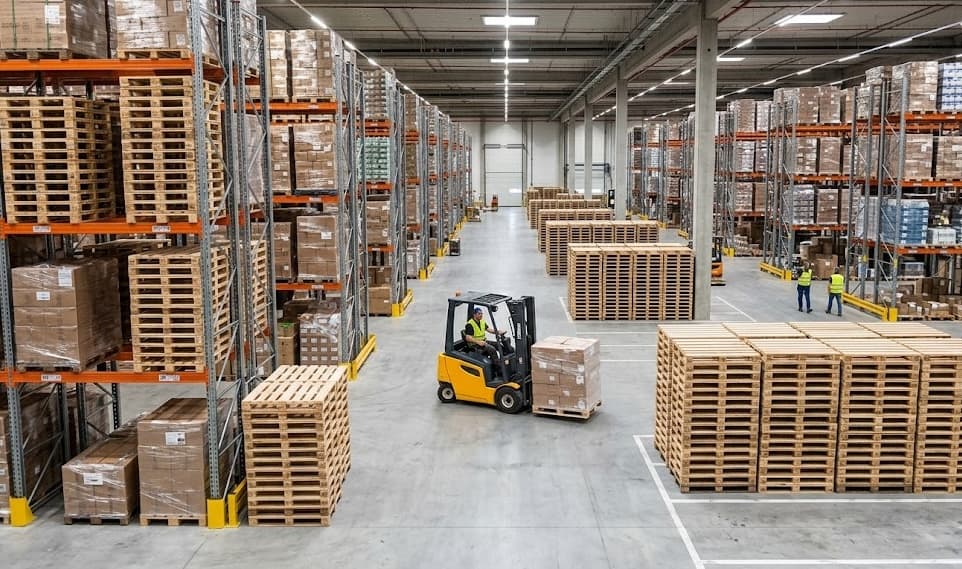
Pallets are the most overlooked asset in most warehouses. They support every product on every rack and in every trailer, yet few operations have formal pallet management programs. The result is predictable: damaged pallets cause product losses, inefficient pallet usage inflates costs, safety incidents from failed pallets create liability, and mountains of broken wood accumulate in the yard with no plan for disposal or recovery.
A structured approach to pallet management can reduce your pallet spending by 15 to 30 percent while simultaneously improving safety, product protection, and environmental performance. Here are ten proven strategies that the most efficient warehouses use to get their pallet programs under control.
1. Track Your Pallet Inventory Like Any Other Asset
Most warehouses can tell you exactly how many cases of product they have on hand but have no idea how many pallets are in their facility. This blind spot makes it impossible to identify waste, theft, or inefficiency. Start by counting your current pallet stock — how many empty pallets are staged for outbound use, how many are stacked in the yard awaiting pickup, and how many are currently under product in racking.
Establish a simple tracking system. This does not require expensive software — a spreadsheet that records incoming pallets (from inbound freight), outgoing pallets (shipped with product), pallets returned to recycler, and pallets scrapped will reveal patterns within the first month. Many warehouses discover they are purchasing 20 to 30 percent more pallets than they actually need because they have no visibility into their existing supply.
2. Establish Clear Pallet Acceptance Standards
Define written standards for which pallets are acceptable for your operation and train your receiving team to enforce them. If you accept products on damaged, undersized, or contaminated pallets from your inbound suppliers, those pallets become your problem. They jam in automated systems, fail under load in racking, and contaminate your outbound pallet pool with substandard units.
Your pallet acceptance standards should specify minimum requirements for board condition, stringer integrity, dimensional tolerance, fastener quality, and cleanliness. Post these standards at every receiving dock and empower your team to reject loads that arrive on non-compliant pallets. Communicate these requirements to your suppliers so they know what is expected before they ship.
3. Implement a Pallet Inspection Routine
Pallets should be inspected before every use, not just when they arrive at your facility. A pallet that was sound when it entered your warehouse may develop damage from forklift handling, product weight, or environmental exposure during storage. A quick pre-use inspection takes less than 10 seconds per pallet and prevents the much more expensive consequences of a pallet failure under load.
10-Second Pallet Inspection Checklist
4. Separate and Sort Empty Pallets Immediately
When inbound freight is unloaded, the empty pallets should be immediately sorted into two categories: reusable for outbound shipping and to-be-returned to the recycler. Do not mix good pallets with damaged ones in a single pile. Mixed stacks make it impossible to accurately count usable inventory and create safety hazards when a damaged pallet buried in a stack fails as the weight of stacked pallets above shifts.
Designate specific areas in your yard or staging zone for each category. Use clear signage and floor markings. This simple organizational step eliminates the daily scavenger hunt where fork drivers dig through mixed piles looking for decent pallets — wasting time, damaging pallets, and slowing outbound operations.
5. Follow Safe Stacking Height Limits
Empty pallets stacked too high are one of the most common safety hazards in warehouse yards. OSHA does not specify a maximum stacking height for empty pallets, but industry best practice limits stacks to 15 pallets high — approximately six feet for standard GMA pallets. Higher stacks become increasingly unstable, especially on uneven ground or in windy conditions.
Loaded pallets in racking should never be stacked above the rated capacity of the rack system. For floor stacking (block stacking without racks), limit stack height based on the pallet's rated static load capacity and the weight of the individual unit loads. Most standard pallets should not be floor-stacked more than three or four high under load, depending on the product weight and how it is distributed on the pallet.
6. Standardize Your Pallet Sizes
Operating with too many pallet sizes creates hidden costs. Each additional size requires separate storage space, separate inventory tracking, and separate sourcing arrangements. Forklift operators waste time identifying the right pallet for each order. Non-standard sizes are harder to source and command premium pricing from suppliers.
Audit your current pallet sizes and determine which are truly necessary for your operations. Many warehouses find they are using five or six sizes when two or three would serve 95% of their needs. Consolidating to fewer sizes reduces purchasing complexity, simplifies yard management, and often earns volume discounts from your pallet supplier.
7. Train Forklift Operators on Pallet-Friendly Handling
Forklift damage is the single largest cause of pallet failure in warehouse environments. Operators who approach pallets too fast, enter fork openings at an angle, or drag forks across the floor into the bottom deck boards cause damage that shortens pallet life and creates safety risks. A broken bottom board caught on a rack beam can cause a loaded pallet to hang up and tip during retrieval.
Include pallet handling in your forklift operator training program. Emphasize approaching pallets squarely, inserting forks fully before lifting, and centering the load on the forks. Some operations track pallet damage rates by shift or by operator to identify individuals who need additional training. Reducing forklift-caused pallet damage by even 25% can extend your average pallet life by two or more trips.
8. Negotiate a Pallet Return Agreement with Your Recycler
If you are paying to dispose of used pallets, you are leaving money on the table. Most pallet recyclers — including Phoenix Pallet Recycling — will purchase your used pallets or at minimum pick them up at no charge. The value depends on size, condition, and current market demand, but even a modest per-pallet buyback price adds up when you are moving thousands of units per month.
Structure a formal agreement with your recycler that specifies pickup schedules, minimum quantities, pricing by grade, and response time guarantees. A reliable recycler becomes a critical supply chain partner — not just someone who hauls away your waste, but a resource that ensures your used pallets generate revenue and your facility stays clean and organized.
9. Use the Right Pallet Grade for Each Application
Not every shipment needs a premium Grade A pallet. Using the highest grade available for every application is a common and expensive mistake. Grade B pallets — fully functional with cosmetic wear — cost 20 to 40 percent less than Grade A and perform identically for the vast majority of shipping applications. Economy grade pallets are ideal for heavy, durable products where appearance does not matter.
Match your pallet grade to your product requirements. Reserve Grade A pallets for retail-display shipments, high-value goods, and customer-facing applications where appearance matters. Use Grade B for standard distribution, internal transfers, and export shipments. Use economy grade for construction materials, raw materials, and other applications where the pallet is a utility, not a presentation platform.
10. Review Your Pallet Costs Quarterly
Pallet costs are not static. Lumber prices fluctuate, supply conditions change, and your own usage patterns evolve over time. A quarterly review of your pallet spending — comparing purchase costs, recycler buyback revenue, damage rates, and per-trip economics — ensures you catch problems early and capitalize on opportunities to optimize.
Track key metrics including cost per pallet by grade, average trips per pallet before retirement, damage rate as a percentage of total inventory, recycler buyback revenue per period, and total pallet spend as a percentage of shipping costs. These numbers give you the data to negotiate better pricing, justify investments in handling improvements, and benchmark your performance against industry averages.
The Bottom Line
Effective pallet management is not about any single initiative — it is about building a system where pallets are tracked, inspected, sorted, handled properly, and sourced strategically. The warehouses that treat pallets as managed assets rather than disposable commodities consistently spend less, experience fewer safety incidents, and operate more efficiently. Phoenix Pallet Recycling is here to help you build that system.