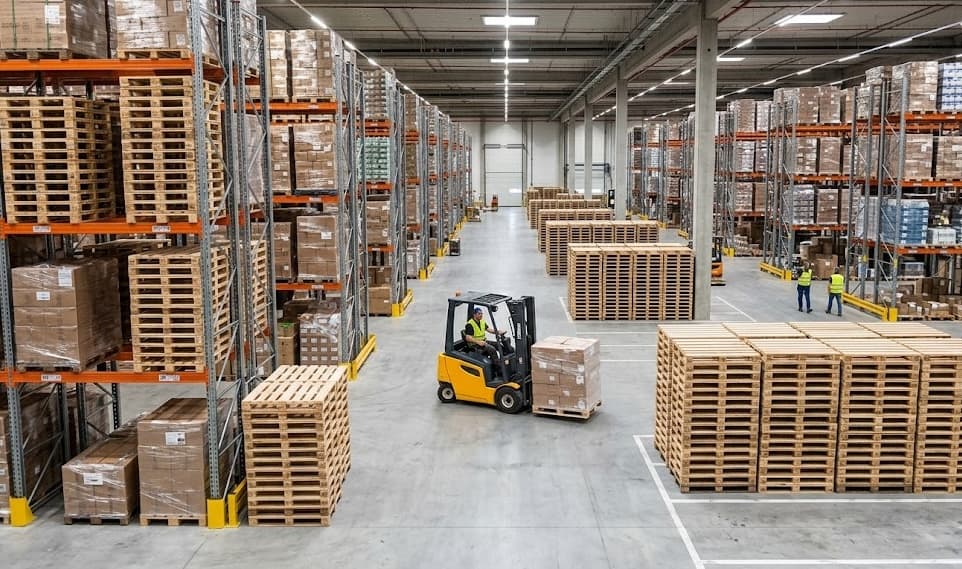
Pallets are so ubiquitous in warehouse and manufacturing environments that workers often stop seeing them as potential hazards. That familiarity is dangerous. The Bureau of Labor Statistics records thousands of pallet-related injuries every year, ranging from puncture wounds and lacerations from protruding nails to crushed limbs from falling pallet stacks to musculoskeletal injuries from manual pallet handling.
Most of these injuries are preventable with proper training, inspection protocols, and handling procedures. As a pallet supplier and recycler, Phoenix Pallet Recycling sees the safety consequences of poor pallet management from both sides — we receive the damaged pallets that cause incidents, and we supply the quality-inspected pallets that prevent them. Here is a comprehensive guide to pallet safety that every warehouse manager, supervisor, and safety officer should implement.
The OSHA Framework for Pallet Safety
OSHA does not have a single, dedicated standard for pallet safety. Instead, pallet handling falls under several general industry and warehousing standards that address the hazards pallets can create. Understanding which standards apply helps safety managers build compliant programs and defend their practices during inspections.
Relevant OSHA Standards
The General Duty Clause is particularly important because it allows OSHA to cite employers for pallet-related hazards even when no specific standard directly addresses the situation. If a reasonable employer would recognize that a particular pallet condition or handling practice poses a risk of serious harm, OSHA can require corrective action.
Inspect Every Pallet Before Use
The single most effective pallet safety practice is inspection before use. A damaged pallet that makes it into the supply chain is a ticking time bomb — it might hold up during loading but fail under the dynamic stresses of forklift transport, conveyor movement, or rack placement. When a loaded pallet collapses, the consequences can be catastrophic: product damage worth thousands of dollars, equipment damage, and serious worker injuries.
Train every worker who handles pallets — not just the safety team — to recognize and reject unsafe pallets. The inspection does not need to be formal or time-consuming. A quick visual and physical check takes less than 15 seconds and should become an automatic habit, like checking mirrors before driving.
Safe Stacking: Height Limits and Stability
Unstable pallet stacks are among the most dangerous conditions in warehouse environments. A stack of 20 empty GMA pallets weighs approximately 600 to 800 pounds and stands over eight feet tall. If that stack topples — and they do, regularly — anyone in the fall zone faces serious risk of crush injuries, head trauma, or broken bones.
Industry best practice recommends limiting empty pallet stacks to no more than 15 units high on level surfaces, and fewer on slopes, uneven ground, or in areas exposed to wind. Stacks should be uniform — do not mix pallet sizes or types in the same stack, as dimensional differences create offset forces that reduce stability.
For loaded pallets, stacking height depends on the load weight, packaging strength, and pallet construction. Never stack loads higher than the pallet and packaging are rated to support. Use columnar stacking (boxes aligned directly over each other) rather than brick-pattern stacking for maximum stability, and always apply stretch wrap or banding before stacking to prevent individual units from shifting.
Forklift and Pallet Interaction Safety
Forklifts and pallets are designed to work together, but improper operation turns this partnership into a hazard. The most common forklift-related pallet incidents involve forks penetrating through the opposite side of a pallet and striking workers or equipment, loaded pallets tipping during transport due to off-center fork placement, and pallet debris from forklift damage becoming projectile hazards.
Every forklift operator should follow these pallet-specific handling rules: approach the pallet squarely and at slow speed, insert forks fully into the pallet opening before lifting, center the load on the forks using the load backrest as a reference, tilt the mast slightly back before traveling to stabilize the load, and lower the load to travel height before moving — never transport a load at elevation.
Pallet jack operators face different but equally real risks. Manual pallet jacks require significant physical effort to move heavy loads, and the repetitive pulling and pushing motions cause musculoskeletal injuries over time. Electric pallet jacks reduce this risk but introduce pinch-point hazards between the jack and pallets or racking. Operators of both types should wear steel-toe boots and be trained to keep hands and feet clear of pallet edges during operation.
Building a Pallet Safety Program
An effective pallet safety program does not happen by accident. It requires documented procedures, regular training, consistent enforcement, and management commitment. Here are the essential elements every warehouse operation should implement:
Start with a written pallet safety policy that defines inspection requirements, stacking limits, handling procedures, personal protective equipment requirements, and the process for removing unsafe pallets from service. This document becomes your training foundation and your defense in the event of an OSHA inspection or worker's compensation claim.
Conduct pallet safety training during new employee orientation and refresh it at least annually for all warehouse staff. Include hands-on demonstrations — show workers what a failed stringer looks like, let them feel the difference between a sound and a weak deck board, and demonstrate the correct way to remove a protruding nail. Lecture-based training alone is not effective; people remember what they see and do far better than what they hear.
Designate a specific area for damaged pallet quarantine. When a worker identifies an unsafe pallet, there must be a clear, convenient place to put it — otherwise, damaged pallets get shoved into corners and eventually mixed back into usable stock. Mark the quarantine area clearly and schedule regular pickups with your pallet recycler to keep the area manageable.
Finally, track your pallet-related incidents. Every nail puncture, every trip over a broken board, every near-miss from a falling stack should be documented. Trend analysis of these incidents reveals patterns — perhaps one particular supplier consistently delivers pallets in poor condition, or a specific area of the warehouse has more incidents because of lighting or layout issues. Data-driven safety improvements are always more effective than reactive responses.
PPE Requirements for Pallet Handling
Anyone who handles pallets manually — even occasionally — should wear appropriate personal protective equipment. At a minimum, this includes work gloves with cut and puncture resistance (ANSI A4 or higher), steel-toe or composite-toe boots to protect against dropped pallets, and safety glasses when performing repairs or disassembly.
For workers who handle pallets regularly, consider additional protection: long sleeves to prevent splinter injuries to forearms, high-visibility vests in areas with forklift traffic, and hearing protection near pallet repair or grinding equipment. The cost of PPE is negligible compared to the cost of a single lost-time injury — which averages over $40,000 in direct costs according to the National Safety Council, before accounting for indirect costs like overtime coverage, retraining, and productivity loss.