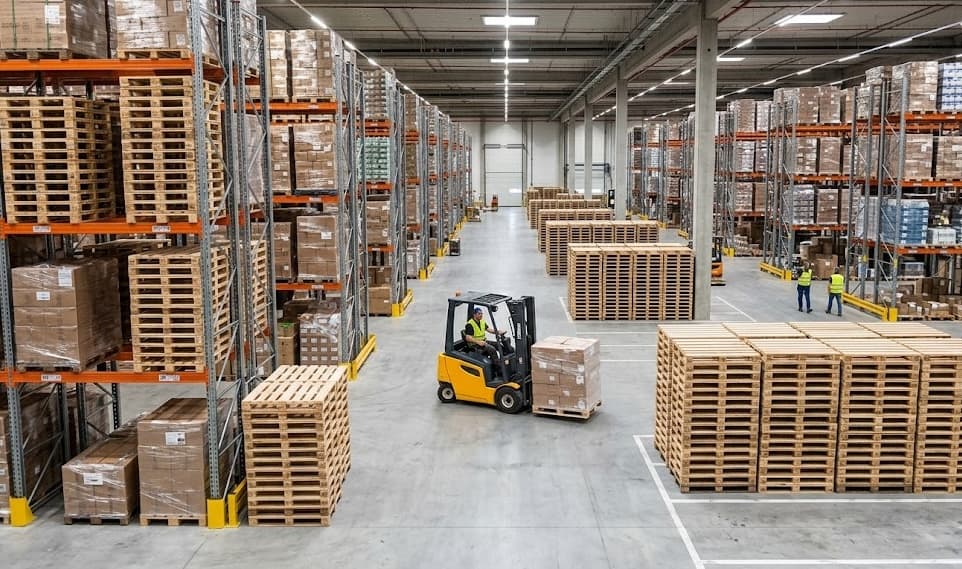
Sustainability Mission
Every pallet we recycle is a tree saved, a landfill lightened, and a step toward the future our planet deserves.
Request a Quote
Fill out the form and our team will get back to you within 24 hours with a customized quote.
The Numbers Speak for Themselves
Since 2005, our recycling operations have made a measurable difference for the environment and the communities we serve.
1M+
Pallets Recycled
Over one million pallets diverted from landfills since 2005
25,000
Trees Saved
Equivalent lumber preserved through repair and reuse programs
15,000
Tons Diverted
Tons of wood waste kept out of landfills
0%
Waste to Landfill
Zero-waste-to-landfill certified since 2019
Why Pallet Recycling
Matters More Than Ever
The United States uses approximately 2 billion wood pallets every year. Of those, an estimated 400 million end up in landfills annually — accounting for roughly 10% of all wood waste in the country. That is millions of trees felled, processed, and discarded after a single use.
The environmental cost goes beyond wasted timber. Decomposing wood in landfills generates methane, a greenhouse gas 80 times more potent than CO2 over a 20-year period. Meanwhile, manufacturing new pallets from virgin lumber requires energy-intensive harvesting, milling, and transportation.
Pallet recycling breaks this destructive cycle. By repairing and reusing pallets, we extend their lifespan from a single trip to five, ten, or even twenty use cycles. When a pallet finally reaches end of life, we recover every last piece of usable material. Nothing goes to waste.
New Pallet Carbon Cost
Harvesting, milling, transportation, and assembly
Recycled Pallet Carbon Cost
Collection, inspection, and minor repair
Carbon Saved Per Pallet
83% reduction in carbon emissions per unit
The Lifecycle of a Recycled Pallet
Our closed-loop process ensures that every pallet — whether it has one trip left or one hundred — finds its highest and best use before any material is recovered.
Collection
We pick up used and discarded pallets from warehouses, manufacturers, and distribution centers across Arizona. Our optimized routes minimize fuel consumption and emissions.
Sorting & Grading
Every pallet is inspected and graded by our trained team. We assess structural integrity, dimensions, and condition to determine the optimal path: direct reuse, repair, or material recovery.
Repair & Refurbishment
Pallets with minor damage are expertly repaired using reclaimed lumber whenever possible. This extends their lifespan by 3 to 5 additional use cycles, dramatically reducing the demand for virgin wood.
Redistribution
Repaired and graded pallets are returned to the supply chain, sold to businesses that need reliable, affordable, and environmentally responsible pallet solutions.
Material Recovery
Pallets beyond repair are broken down into raw materials. Usable lumber is salvaged for repairs. Remaining wood is processed into mulch, animal bedding, biomass fuel, or composite lumber — nothing goes to waste.
Green Initiatives Beyond Recycling
Recycling pallets is our core mission, but our sustainability commitment extends into every corner of our operations.
Route Optimization
We use GPS-optimized routing to minimize fuel consumption on every pickup and delivery run. Our trucks travel fewer empty miles, reducing CO2 emissions per pallet moved by an estimated 20% compared to industry averages.
Reclaimed Lumber Priority
When repairing pallets, we prioritize using lumber salvaged from irreparable pallets. This closed-loop approach means fewer new boards need to be cut, preserving forests and reducing our raw material costs — savings we pass on to our customers.
Biomass & Mulch Conversion
Wood that cannot be reused in any pallet form is ground into mulch for landscaping or processed into biomass fuel for energy generation. We partner with local landscaping companies and energy producers to ensure every fiber finds a second purpose.
Water & Energy Conservation
Our facility uses energy-efficient equipment, LED lighting, and rainwater collection for non-potable uses. We track our energy consumption quarterly and set reduction targets each year.
Community Clean-Up Programs
We actively participate in neighborhood clean-up events across the Phoenix metro area, removing illegally dumped pallets and wood waste from vacant lots and roadsides. These pallets enter our recycling stream instead of polluting local ecosystems.
Supplier & Partner Standards
We hold our suppliers and partners to the same environmental standards we set for ourselves. Our vendor agreements include sustainability clauses covering waste reduction, ethical sourcing, and emissions accountability.
Our Environmental Pledge
We pledge to operate as environmental stewards in everything we do. That means maintaining our zero-waste-to-landfill commitment, continuously reducing our carbon footprint, and finding innovative ways to extract value from materials that others discard.
By 2030, we aim to double our recycling capacity while cutting per-unit energy consumption by 30%. We are investing in electric fleet vehicles, expanding our rainwater capture systems, and exploring solar energy to power our facility.
Sustainability is not a trend for us — it is why we exist. Every decision we make, from the routes our trucks drive to the nails we use in repairs, is evaluated through the lens of environmental impact. We invite our customers, partners, and community to hold us accountable to this standard.
The True Cost of a Landfilled Pallet
When a pallet is thrown away instead of recycled, the environmental cost goes far beyond wasted wood. Here is what actually happens when a single standard 48x40 pallet ends up in a landfill.
Methane Generation
A standard wood pallet weighs approximately 30 to 70 pounds. As it decomposes in a landfill over 5 to 15 years, the anaerobic breakdown process generates methane — a greenhouse gas with 80 times the warming potential of CO2 over a 20-year period. A single pallet produces an estimated 3.5 to 8 pounds of methane equivalent over its decomposition lifecycle. Multiply that by the 400 million pallets landfilled in the US annually, and the numbers become staggering: roughly 1.4 billion to 3.2 billion pounds of methane equivalent released each year from pallet waste alone.
Lost Lumber Value
Every standard pallet contains approximately 10 to 12 board feet of usable lumber. At current hardwood and softwood lumber prices, that represents $4 to $8 worth of raw material per pallet. When 400 million pallets are landfilled annually, that translates to $1.6 to $3.2 billion in wasted lumber value. This lumber could have been salvaged for repairs, remanufactured into new products, or processed into mulch and biomass — all of which have positive economic value instead of disposal cost.
Transportation Emissions to Landfill
Getting discarded pallets to a landfill requires fuel-intensive truck transport. A typical pallet waste hauler carries 200 to 300 pallets per load to a landfill that may be 20 to 50 miles from the point of disposal. That single trip burns 5 to 12 gallons of diesel fuel, producing 50 to 120 pounds of CO2. Across the country, hauling pallets to landfills consumes an estimated 20 to 30 million gallons of diesel fuel annually — a cost absorbed by businesses and ultimately by the environment.
Landfill Space Consumption
Wood pallets are bulky. A standard 48x40 pallet occupies roughly 13 cubic feet of landfill space even when crushed. With 400 million units landfilled annually, pallet waste consumes approximately 5.2 billion cubic feet of landfill volume per year — the equivalent of filling over 1,800 Olympic swimming pools with compacted pallet waste. In Arizona, where landfill capacity is increasingly constrained and tipping fees average $45 to $55 per ton, this is not just an environmental problem — it is an expensive one.
Chemical Leaching Risk
Pallets treated with chemical preservatives, paint, or stains can leach hazardous substances into soil and groundwater as they decompose. While modern ISPM-15 regulations have largely eliminated the use of methyl bromide, older pallets still entering the waste stream may contain legacy chemical treatments. Recycling operations like ours sort and isolate chemically treated pallets to ensure they are handled appropriately rather than buried where they can contaminate water tables.
Cost Summary: One Landfilled Pallet
When you multiply these costs across the 400 million pallets landfilled in the US each year, the total environmental and economic waste exceeds $5 billion annually. Recycling is not just the responsible choice — it is the only rational one.
Your Carbon Offset at a Glance
Switching from new pallets to recycled pallets has a measurable, quantifiable impact on your company's environmental footprint. Here is what the numbers look like at different volumes.
500 Pallets/Month
A small-to-mid-size operation switching to recycled pallets. Common for regional distributors, local manufacturers, and specialty food companies.
1,000 Pallets/Month
A mid-size warehouse or distribution center. Typical for companies running 2-3 shipping docks and serving multi-state territories.
5,000 Pallets/Month
A large-scale logistics operation or national distribution hub. These volumes represent the kind of impact that moves the needle on corporate sustainability reporting.
Calculations based on EPA and USDA data. Tree savings assume 1 tree produces approximately 400 board feet of lumber and a standard pallet requires 10-12 board feet. CO2 figures based on the 25 lbs CO2 differential between new and recycled pallet production. Water savings based on the estimated 75 gallons required to grow and process lumber for one new pallet. Diesel savings based on reduced harvesting, milling, and virgin material transportation. Actual savings vary based on pallet size, grade, and regional factors.
Sustainability Certifications & Partnerships
We hold ourselves to the highest environmental and operational standards in the pallet industry. Here are the certifications, affiliations, and partnerships that back our sustainability commitment.
ISPM-15 Certified Heat Treatment Facility
Our facility is certified under the International Standards for Phytosanitary Measures No. 15, the global standard for treating wood packaging materials used in international trade. Our kiln operation is audited annually by an accredited inspection agency, and every heat-treated pallet carries our registered certification stamp. This ensures our customers can ship internationally without risk of customs rejection due to non-compliant packaging.
National Wooden Pallet & Container Association (NWPCA)
We are members of the NWPCA, the primary trade association for the wood packaging industry in North America. Membership requires adherence to the association's quality standards, safety protocols, and environmental best practices. Through the NWPCA, we stay current on regulatory changes, industry benchmarks, and emerging sustainability technologies. We participate in their annual Pallet Design System training to ensure our custom pallet builds meet structural engineering requirements.
Zero-Waste-to-Landfill Verified
Since 2019, Phoenix Pallet Recycling has maintained a verified zero-waste-to-landfill operation. Every pallet that enters our facility exits as either a repaired pallet for reuse, salvaged lumber for repairs, mulch for landscaping, biomass fuel for energy generation, or scrap metal from recovered nails and hardware. We document our waste diversion rates quarterly, and our records are available for customer audit upon request.
Arizona Recycling Coalition Partner
We are an active partner of the Arizona Recycling Coalition, a statewide nonprofit organization dedicated to promoting recycling and waste reduction across Arizona. Through this partnership, we contribute to public education campaigns about wood waste recycling, participate in annual recycling rate surveys, and collaborate with other recyclers to improve diversion rates for construction and industrial waste streams in the Phoenix metro area.
EPA WasteWise Program Participant
Phoenix Pallet Recycling participates in the EPA's WasteWise program, a voluntary initiative that encourages organizations to reduce municipal solid waste and industrial materials. As a WasteWise partner, we report our annual waste prevention and recycling metrics to the EPA and receive benchmarking data that helps us measure our performance against national standards. Our participation demonstrates our commitment to transparency and continuous improvement.
Sustainable Forestry Initiative (SFI) Sourcing Standards
When we purchase new lumber for custom pallet construction or repair stock, we prioritize suppliers who are certified under the Sustainable Forestry Initiative or equivalent forest certification programs (FSC, PEFC). This ensures that even the virgin lumber we use comes from responsibly managed forests with replanting commitments, biodiversity protections, and fair labor practices. Approximately 85% of our new lumber purchases come from SFI-certified sources.
How We Compare on Green Metrics
An honest look at how Phoenix Pallet Recycling stacks up against a typical pallet supplier on key environmental and sustainability measures.
Our 2030 Green Roadmap
Sustainability is a journey, not a destination. Here are the concrete milestones we have set on our path to an even greener operation by the end of this decade.
Solar Panel Installation
Install a 150 kW rooftop solar array on our main facility building to offset 40% of our electricity consumption. The system will include battery storage to power evening operations and reduce our reliance on grid electricity during peak demand periods. Projected annual savings: 180,000 kWh and 127 metric tons of CO2.
Electric Fleet Pilot
Introduce two electric flatbed trucks to our delivery fleet for short-haul routes within the Phoenix metro area. These vehicles will handle deliveries under 50 miles round trip, which accounts for approximately 60% of our daily dispatches. We are evaluating models from BYD, Lion Electric, and Freightliner eCascadia. On-site Level 3 charging stations will be installed as part of the solar project.
Rainwater Harvesting Expansion
Triple our rainwater capture capacity from 5,000 gallons to 15,000 gallons. Collected rainwater will be used for dust suppression on the yard, equipment washing, and landscape irrigation. In the desert climate of Phoenix, every gallon of captured rainwater directly reduces our municipal water consumption. We will also install a grey water recycling system for our facility restrooms.
Carbon-Neutral Delivery Operations
Achieve carbon-neutral status for all delivery operations through a combination of electric vehicles, route optimization improvements, and verified carbon offset purchases for remaining diesel emissions. We will partner with a third-party auditor to verify our calculations and publish an annual carbon neutrality report.
Double Recycling Capacity
Expand our sorting and repair capacity to process 25,000+ pallets per week, up from our current 12,000. This will require adding a second sorting line, hiring 8 additional repair technicians, and expanding our staging yard by approximately 10,000 square feet. Greater capacity means more pallets diverted from landfills across the entire Southwest region.
30% Per-Unit Energy Reduction
Reduce energy consumption per pallet processed by 30% compared to our 2023 baseline. This target will be achieved through equipment upgrades (high-efficiency compressors, variable-frequency drive motors), process improvements (batch scheduling optimization for the heat treatment kiln), and behavioral changes (energy awareness training for all staff). Progress will be tracked and reported quarterly.
Industry Education Initiative
Launch a free educational program for Arizona businesses on sustainable supply chain practices, with a focus on pallet lifecycle management. The program will include workshops, facility tours, online resources, and a certification track for companies that meet sustainability benchmarks in their pallet procurement. Our goal is to educate 200 businesses in the first year.
2 Million Pallets Milestone
Reach the milestone of 2 million total pallets recycled since founding. At our projected growth rate, this milestone will represent an estimated 50,000 trees saved, 30,000 tons of wood diverted from landfills, and over 25,000 metric tons of CO2 emissions prevented. We will celebrate this achievement with a community event and the launch of a scholarship fund for students pursuing environmental science and sustainable business degrees at Arizona State University.