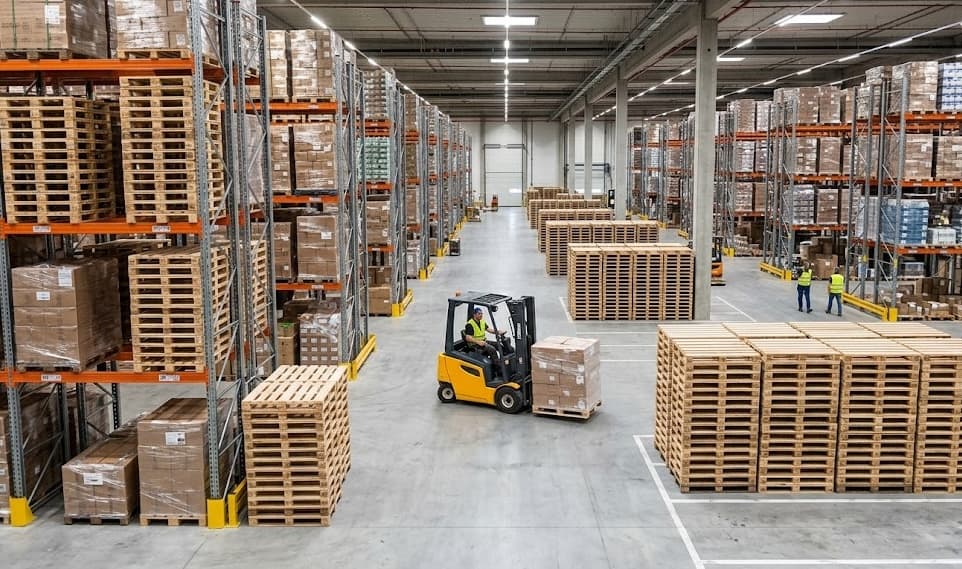
Pallets are one of those supply chain costs that many businesses accept without questioning. You need them, you buy them, they disappear into the workflow. But for companies that ship any meaningful volume, pallet costs add up fast — and the difference between buying new pallets and buying recycled pallets can represent tens of thousands of dollars annually. This article breaks down the numbers.
The Price Gap: New vs. Recycled
The most obvious cost advantage of recycled pallets is the per-unit purchase price. A new 48x40 GMA pallet costs between $15 and $25 depending on lumber market conditions, lumber species, and order volume. A Grade B recycled pallet of the same dimensions typically costs between $5 and $9 — a savings of 50% to 75% per pallet.
Per-Unit Cost Comparison (48x40 GMA)
These price differences are not marginal. For a business purchasing 1,000 pallets per month, switching from new pallets at $18 each to Grade B recycled at $7 each saves $11,000 per month — or $132,000 per year. That is real money that goes directly to the bottom line.
Total Cost of Ownership: The Complete Picture
Smart procurement managers look beyond the purchase price to evaluate total cost of ownership (TCO). This includes the purchase price, delivery costs, useful life, repair costs, and end-of-life value. Here is how recycled pallets perform across every TCO component:
Purchase Price
RecycledRecycled saves 61% on acquisition cost
Delivery Cost
NeutralBoth ship at similar densities on the same trucks
Useful Life (trips)
NewNew pallets last longer, but the per-trip cost still favors recycled
Per-Trip Cost
RecycledLower upfront cost overcomes shorter lifespan
Repair Costs
NewRecycled pallets may need repairs 1-2 trips sooner
Resale/Buyback Value
Slight NewBoth retain value; Phoenix buys back used pallets
When you aggregate all TCO components, recycled pallets save 20-40% compared to new pallets on a per-trip basis. The initial purchase price advantage is so significant that it outweighs the slightly shorter useful life and marginally higher repair frequency.
ROI Scenarios: Real-World Savings
Let us run the numbers for three common business scenarios to illustrate the financial impact of switching to recycled pallets:
Small Manufacturer
200 pallets/month
Regional Distributor
1,000 pallets/month
Large Warehouse
5,000 pallets/month
These calculations use conservative average pricing — actual savings may be higher depending on your negotiated rates, volume tiers, and local market conditions. The point is clear: at every scale, recycled pallets deliver substantial cost savings without compromising operational performance.
Hidden Savings You May Not Have Considered
Beyond the direct per-unit cost savings, recycled pallets unlock several indirect financial benefits that further improve your ROI:
Pallet Buyback Revenue
Phoenix Pallet Recycling buys back your used pallets, turning a disposal cost into a revenue stream. Even damaged pallets have value — we purchase pallets in all conditions.
Reduced Disposal Costs
Businesses that throw away pallets pay for dumpster space, hauling fees, and landfill tipping charges. Recycling eliminates these costs entirely and may even generate income.
Sustainability Reporting Benefits
Companies with documented pallet recycling programs can quantify waste diversion and carbon reduction in their ESG reports. This improves standing with investors, customers, and regulatory bodies.
Supply Chain Resilience
Recycled pallets are less susceptible to the lumber price volatility that affects new pallet pricing. When raw lumber costs spike (as they did in 2021), recycled pallet prices remain more stable.
Faster Availability
Recycled pallets are typically available for delivery within 1-3 business days. New custom pallets may require 5-10+ business days for production. Faster availability means fewer supply disruptions.
Making the Switch Is Easy
Transitioning from new pallets to recycled pallets does not require any operational changes. The pallets are the same dimensions, they work with the same forklifts and racking systems, and they handle the same loads. The only thing that changes is your cost — and it goes down.
Here is how to get started with Phoenix Pallet Recycling:
Request a Quote
Tell us what size, grade, and quantity you need. We respond within 24 hours with competitive pricing.
Try a Test Order
Start with a small order to verify quality meets your expectations. We are confident you will be impressed.
Set Up Recurring Delivery
Once satisfied, establish a regular delivery schedule. We handle logistics so you always have pallets on hand.
Sell Back Used Pallets
Complete the circle by selling us your used pallets. We pay competitive prices for pallets in all conditions.