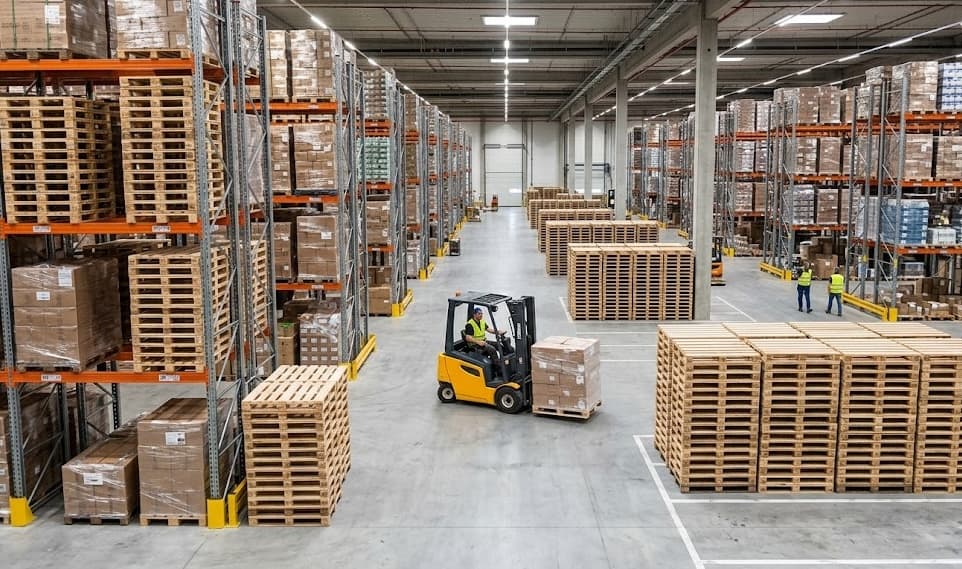
The packaging industry stands at an inflection point. Consumer expectations, regulatory pressure, and genuine corporate commitment are converging to reshape how goods are packaged, shipped, and handled. For the pallet industry specifically, these shifts represent both a challenge and an extraordinary opportunity. The companies that adapt will thrive. Those that don't will find themselves increasingly marginalized in a market that demands sustainability at every level.
At Phoenix Pallet Recycling, we have been operating at the intersection of sustainability and logistics since our founding. Here is our assessment of where the industry is heading — and what it means for businesses that rely on pallets every day.
The Circular Economy Takes Center Stage
The linear economy model — extract, manufacture, use, discard — is giving way to circular economy principles where materials are designed to be reused, repaired, remanufactured, and recycled indefinitely. The pallet industry was practicing circular economy decades before the term became fashionable. A well-managed wood pallet can be repaired and reused 15 to 20 times before the wood is reclaimed for other products like mulch, animal bedding, or biomass fuel.
The next evolution is formalizing these circular pathways. Pallet pooling systems — where pallets are shared across multiple companies rather than owned individually — are growing rapidly. These systems optimize utilization rates, reduce the total number of pallets needed in the economy, and create clear financial incentives for proper pallet management and return.
For small and mid-size businesses, partnering with a local pallet recycler like Phoenix Pallet Recycling achieves many of the same circular economy benefits without the complexity or cost of joining a national pooling system. You buy recycled pallets, use them, and sell them back when you are done — completing the loop at a local level and keeping the economic benefits within your community.
Technology Transforms Pallet Management
Several emerging technologies are beginning to reshape how pallets are tracked, managed, and optimized across the supply chain:
IoT Sensors & RFID Tags
Smart pallets equipped with RFID tags or IoT sensors allow real-time tracking of location, temperature, humidity, and shock events throughout the supply chain. This visibility reduces loss rates, enables condition monitoring for sensitive cargo, and provides data for optimizing pallet utilization and return logistics.
Blockchain Traceability
Blockchain-based systems can create immutable records of a pallet's journey — from manufacturing through every use cycle, repair, and treatment. For food safety and pharmaceutical supply chains, this level of traceability satisfies regulatory requirements and provides consumers with verifiable proof of supply chain integrity.
AI-Powered Inspection
Computer vision and machine learning systems are being deployed to automate pallet grading and quality inspection. These systems can assess structural integrity, identify damage, and grade pallets faster and more consistently than manual inspection, reducing labor costs and improving quality control.
Predictive Analytics
Data-driven forecasting models are helping large pallet operations predict demand patterns, optimize repair scheduling, and manage inventory levels more efficiently. This reduces waste by ensuring pallets are repaired before failure and right-sized inventories prevent both shortages and excess.
Digital Marketplace Platforms
Online platforms are connecting pallet buyers and sellers more efficiently, reducing geographic inefficiencies where surplus pallets in one region coexist with shortages in another. These platforms lower transaction costs and make it easier for businesses to participate in the circular pallet economy.
Material Innovation Expands Options
While traditional wood pallets will remain dominant for the foreseeable future due to their unmatched combination of cost, availability, repairability, and recyclability, material innovation is creating new options for specific applications:
Recycled Plastic Pallets
Growing in cleanroom, pharmaceutical, and closed-loop food applications where washability and chemical resistance are critical. Cost remains 5-10x higher than wood, limiting broader adoption.
Bamboo & Fast-Growth Fiber
Bamboo grows 30x faster than traditional lumber species, making it an appealing renewable alternative. Early-stage commercial products are entering the Asian market, with potential for global expansion.
Molded Fiber / Presswood
Made from compressed wood waste and agricultural byproducts. Lightweight, nestable, and exempt from ISPM-15 requirements. Gaining traction in air freight and lightweight one-way export applications.
Hybrid Designs
Combining wood and composite materials to optimize specific performance characteristics. Wood stringers with composite deck boards, for example, can offer improved moisture resistance while maintaining repairability.
The common thread across all material innovations is sustainability. Whether it is recycled plastic diverting petroleum waste from landfills, fast-growth fibers reducing pressure on traditional forests, or compressed wood waste finding new life as structural packaging, the direction is clear: the packaging industry is moving toward materials that minimize environmental impact at every stage of their lifecycle.
Regulatory Landscape Tightens
Governments worldwide are implementing stricter regulations around packaging waste, extended producer responsibility (EPR), and carbon emissions reporting. These regulations will increasingly affect pallet users and suppliers:
For businesses that already use recycled pallets, these regulatory trends are mostly positive — your existing practices are aligned with the direction of policy. For companies still relying exclusively on new pallets or disposing of used pallets as waste, the compliance and cost implications of these regulations make the case for partnering with a recycler more compelling than ever.
What This Means for Your Business
The future of sustainable packaging is not abstract — it is happening now, and it affects every business that ships products. Here are the practical takeaways:
At Phoenix Pallet Recycling, we have spent years building the infrastructure, expertise, and relationships needed to support businesses through this transition. Whether you are taking your first step toward recycled pallets or looking to optimize an existing pallet management program, we are here to help you navigate the future of sustainable packaging.