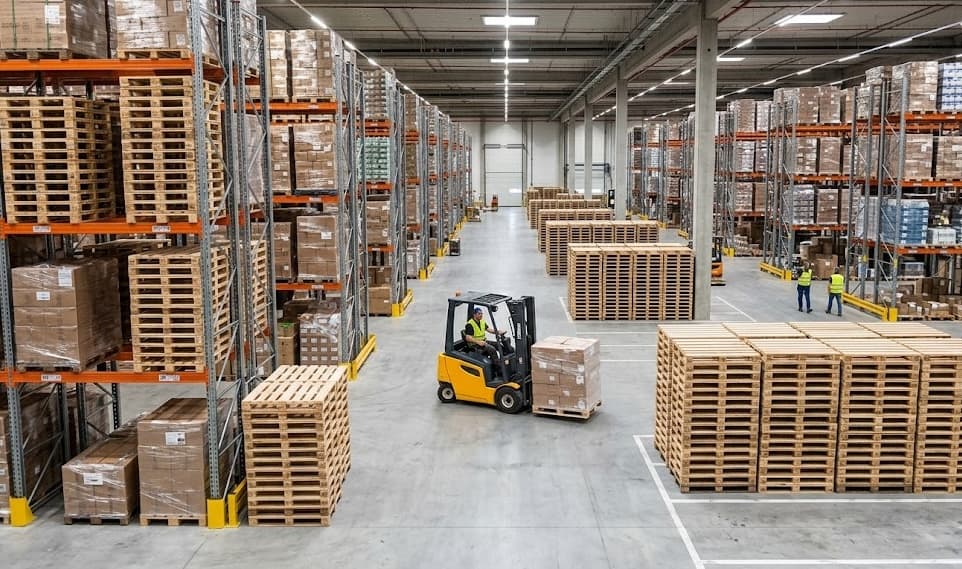
Arizona has quietly transformed from a regional market into one of the fastest-growing logistics and distribution hubs in the western United States. The numbers tell the story: the Phoenix metropolitan area added over 200,000 residents between 2020 and 2025, making it the fastest-growing large metro in the nation. That population growth has attracted a wave of e-commerce fulfillment centers, third-party logistics providers, and manufacturing operations — all of which depend on a reliable, cost-effective supply of pallets.
For businesses operating in Arizona's logistics ecosystem, understanding these trends is essential for planning pallet procurement, managing costs, and positioning themselves in a rapidly evolving supply chain landscape. Here is what is driving Arizona's logistics boom and what it means for the pallet industry.
Phoenix Growth: Population Drives Distribution
The Phoenix-Mesa-Chandler metropolitan area is now the fifth-largest metro in the United States, surpassing Philadelphia and approaching the population of Houston. This growth is not just residential. Every new household generates demand for consumer goods, groceries, building materials, appliances, and furniture — all of which move through supply chains on pallets.
Major retailers have responded by building massive distribution centers throughout the Valley. In the past five years alone, new fulfillment and distribution facilities totaling over 25 million square feet of warehouse space have been constructed or announced in Phoenix, Goodyear, Buckeye, Mesa, Gilbert, and Casa Grande. Each of these facilities consumes and generates thousands of pallets daily.
The semiconductor industry has added another dimension to Arizona's logistics growth. With major chip fabrication plants under construction in north Phoenix, the region is experiencing an influx of high-tech manufacturing that requires specialized packaging, clean pallets, and just-in-time delivery logistics. These facilities demand heat-treated, Grade A pallets that meet strict contamination control standards — a segment of the pallet market that is growing rapidly in the Valley.
E-Commerce Fulfillment: The Pallet-Intensive Industry
E-commerce fulfillment centers are among the most pallet-intensive operations in modern logistics. A single large fulfillment center can process over 100,000 packages per day, with inbound inventory arriving on pallets from manufacturers and distributors worldwide. These facilities consume pallets at a prodigious rate — a typical 1-million-square-foot fulfillment center uses between 3,000 and 8,000 pallets per day for inbound receiving alone.
Arizona has become a preferred location for e-commerce fulfillment because of its central position in the Sun Belt, relatively lower real estate and labor costs compared to California, and the ability to provide one-day or two-day delivery coverage to major markets across the Southwest, West Coast, and Mountain West regions. Companies like Amazon, Walmart, Target, Chewy, and numerous third-party logistics providers have established major fulfillment operations in the Phoenix metro area.
The pallet demand generated by these facilities is substantial and growing. Many e-commerce operations prefer recycled pallets for inbound receiving because cost savings on pallets directly improve per-unit fulfillment economics. This creates a strong and growing market for recycled pallets in the Phoenix area — exactly the market that Phoenix Pallet Recycling serves.
The I-10 Corridor: Arizona's Freight Superhighway
Interstate 10 is the backbone of freight movement in the southwestern United States. Running from Los Angeles through Phoenix and on to Tucson, El Paso, San Antonio, and Houston, the I-10 corridor is one of the busiest freight routes in North America. Over 30,000 trucks per day pass through the Phoenix metropolitan area on I-10, carrying everything from agricultural products and consumer goods to industrial equipment and raw materials.
Phoenix sits at the intersection of I-10 and I-17 (which runs north to Flagstaff and connects to I-40), making it a natural crossroads for freight moving between the West Coast, the interior Southwest, and the rest of the country. This geographic advantage has attracted a concentration of trucking companies, freight brokers, intermodal terminals, and cross-dock facilities — all of which depend on pallets to move freight efficiently.
The planned expansion of the I-11 corridor between Phoenix and Las Vegas will further strengthen Arizona's position as a logistics hub by providing a direct, high-capacity freight route between two of the fastest-growing metros in the West. As freight volumes increase along these corridors, pallet demand will grow proportionally.
Port Drayage: The California Connection
The ports of Los Angeles and Long Beach handle approximately 40% of all containerized imports entering the United States. A significant and growing share of that cargo is drayed by truck from the port to inland distribution centers — and Phoenix has become a major destination for port drayage operations. The roughly 370-mile trip from the ports to Phoenix is a single-day drive for a truck, making it faster and cheaper than rail for many shipments.
When containers arrive from overseas, the products inside are typically floor-loaded or stacked on low-quality export pallets that are not suitable for domestic distribution. At the receiving warehouse in Phoenix, these goods must be depalletized and re-palletized onto domestic-standard pallets before they can be distributed to retailers and end customers. This transloading process creates enormous demand for quality domestic pallets — both new and recycled — at competitive prices. Phoenix Pallet Recycling supplies many of these transloading operations with the recycled pallets they need to keep goods flowing from port to shelf.
Meeting the Demand: What This Means for Your Business
Arizona's logistics boom is creating both opportunities and challenges for businesses that depend on pallets. On the opportunity side, growing demand has attracted more pallet suppliers to the market, increasing competition and providing buyers with more options. On the challenge side, periods of peak demand — particularly during the holiday season and post-harvest agricultural shipping — can strain pallet supply and push prices upward.
The businesses that manage these dynamics most effectively are those that build long-term relationships with local pallet suppliers, establish standing orders to guarantee supply during peak periods, and use recycled pallets wherever possible to control costs. Phoenix Pallet Recycling is committed to supporting Arizona's growing logistics ecosystem with a reliable supply of quality recycled pallets, competitive pricing, and the flexible delivery schedules that modern distribution operations demand.